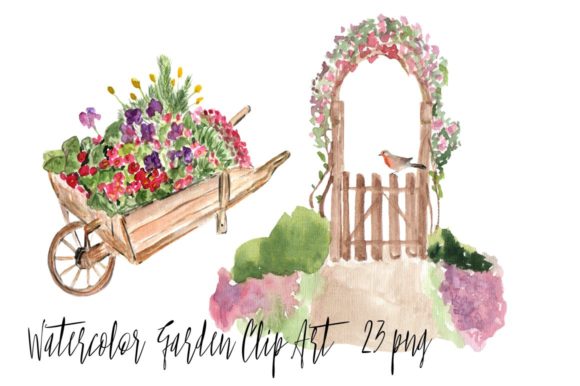
23 Watercolor Garden Clip Art & Illustrations
As a digital publisher who has spent over a decade refining the visual language of content websites, I know that the difference between a casual blog and a trusted authority often comes down to one thing: editorial quality. When I first opened the package for 23 Watercolor Garden Clip Art, my immediate reaction was not just about the aesthetic appeal, but how these specific illustrations could transform the mood of an entire niche site. In the crowded landscape of content marketing, where readers scan dozens of pages in seconds, your graphic design assets must do heavy lifting. They need to signal trust, evoke emotion, and guide the eye without shouting. This collection delivers exactly that, offering a soft, organic texture that feels both timeless and modern.
The Editorial Mood and Visual Hierarchy
The moment you preview the 23 Watercolor Garden Clip Art, the intended vibe is unmistakable. These are not stiff, vector-perfect corporate icons; they possess the fluidity and slight imperfection of hand-painted watercolors. For publishers targeting lifestyle, wellness, gardening, home decor, or even creative entrepreneurship, this style creates an immediate sense of warmth and approachability. It signals to the reader that the content behind the image is human-centric, thoughtful, and curated. In terms of visual hierarchy, these illustrations work beautifully as focal points because their soft edges contrast elegantly with sharp, clean typography. If you are building a brand identity that relies on authenticity, these assets provide a polished look that stock photos often struggle to achieve without feeling generic.
Real-World Publishing Applications
In my own workflow, I rarely use a single asset for just one purpose. The versatility of this set allows me to deploy it across multiple touchpoints in the content ecosystem. Imagine preparing a new seasonal campaign for a gardening affiliate blog. You can use a large floral element from the 23 Watercolor Garden Clip Art set as the hero image for your homepage banner. The same illustration, cropped differently, becomes a stunning Pinterest pin designed to drive traffic back to your latest article. Because the background is transparent and the colors are rich yet muted, these graphics integrate seamlessly into Canva templates, ensuring your social media graphics maintain a consistent brand voice.
Beyond social media, these illustrations are powerful tools for creating downloadable resources. As an online educator, I often create lead magnets like digital guides or printable design sheets. Using a watercolor garden motif on the cover of an eBook or a worksheet instantly elevates the perceived value of the freebie. It transforms a simple PDF into a premium-looking digital product. Furthermore, when designing newsletter headers, these images add a layer of sophistication that encourages open rates. Unlike busy photography, which can get lost in small email windows, the clean lines and distinct shapes of these clip art pieces remain recognizable even at smaller scales, reinforcing your category visuals every time a subscriber checks their inbox.
Boosting Click-Through Potential and Trust
One of the most critical metrics for any website owner is click-through rate (CTR), and visual presentation plays a massive role here. A generic, low-quality thumbnail often leads to bounce, whereas a custom, high-end graphic invites engagement. By incorporating the 23 Watercolor Garden Clip Art into your blog graphics and article thumbnails, you create a stronger first impression. Readers subconsciously associate professional, cohesive design with expertise. If your website header and featured images look like they belong in a high-end magazine, your audience is more likely to trust your recommendations, whether you are promoting affiliate products or selling your own courses. This consistency builds a robust brand identity that stands out against competitors using default themes or mismatched stock imagery.
Strategic Placement and Design Constraints
While these assets are incredibly versatile, knowing where to use them carefully is part of being an experienced designer. These illustrations shine in hero images, editorial accents, and social media previews where there is ample whitespace to let the artwork breathe. However, they should be used with caution in text-heavy blog images or on very busy layouts. If you overlay too much text directly on top of the intricate details of a flower or leaf, readability suffers. Additionally, while the watercolor style is perfect for lifestyle and creative niches, it might feel out of place in serious corporate sectors or technical B2B environments that demand a stark, minimal visual system. Always test how the asset looks on mobile screens; sometimes the delicate strokes of watercolor can appear muddy if the file size is compressed too aggressively for fast web performance.
Practical Publisher Notes for Implementation
Before integrating any new design asset into a live site, I follow a strict testing protocol. First, always review the commercial license to ensure you have the right to use the 23 Watercolor Garden Clip Art on monetized websites, affiliate pages, or paid content products. Once cleared, download the files and check the resolution. High-resolution originals are essential for printables, but for web design, you must compress images properly to avoid slowing down your page load speed. Test the illustrations against different font pairings; try placing them beside a bold sans-serif font for a modern look, or a flowing script font for a romantic feel. Also, preview the images in black and white to ensure the contrast holds up if your theme ever switches to grayscale mode. Finally, view the final composition inside your actual blog layout to confirm the visual hierarchy works before hitting publish.
Final Thoughts on Creative Value
For small business owners, creative entrepreneurs, and digital marketers looking to elevate their online presence, the 23 Watercolor Garden Clip Art represents more than just a collection of pictures. It is a toolkit for better storytelling. Whether you are crafting a media kit, designing a digital guide, or simply sprucing up your category pages, having access to high-quality, thematic illustrations makes the difference between a DIY project and a professional publication. In a world saturated with content, your visuals are your handshake. Make sure yours leaves a lasting, positive impression. By leveraging these creative design elements thoughtfully, you not only improve the aesthetics of your site but also enhance the overall user experience, driving engagement and fostering a loyal community around your brand.